The “Yaraku-Jin” (People of Yaraku) series explores the essence of Yaraku and Yaraku Translate by focusing on the people involved—our team members, customers who use Yaraku Translate, and our partners. This time, we spoke with Rina Watanabe, who handles Internal Communications and is a Linguist in the HR & General Affairs team.
What do you do at Yaraku?
I work as an Internal Communications and Linguist. Specifically, I build our internal portal site, suggest appropriate wording for back-office request workflows, create interview articles, and translate product UI text. While I belong to the HR and GA team, I feel like a bit of a “free agent,” collaborating with various teams across the company.
“Linguist” is a title we don’t hear often in Japan. How did you come to have that title?
Actually, I originally worked at Yaraku as a part-timer. When I was offered a regular employee position last year, the invitation was: “Would you like to try Internal Communications?” At that point, I was already convinced that I could grow comfortably at Yaraku, so I definitely wanted to take the opportunity. However, having “Internal Communications” as my only title didn’t feel quite right.
I wanted to contribute to the company specifically through language, and I had already been given tasks that allowed me to do that during my time as a part-timer. So, I asked my manager, “Could you add ‘Linguist’ to my title?” and gratefully, both she and the company accepted it.
— So that’s how it happened. Specifically, what kind of work do you do as an Internal Communications/Linguist?
From what I hear, a linguist is defined as someone proficient in languages who acts as a professional regardless of the genre. Personally, I feel that a major part of my job involves creating that awareness for using language more precisely.
For example, when we had the phrase ‘Removing language barriers,’ I proposed an alternative like ‘Communicating across languages,’ which avoids negative connotations and adds a more ‘Yaraku-ish’ feel.
Also, on the internal portal, there was a page titled ‘結婚したら行う手続き,’ and the English translation was ‘Things To Do After Your Marriage.’ I realized this could potentially be read as ‘after the marriage ends,’ which could mean after a divorce, so I suggested ‘Things To Do After Getting Married.’ Proactively choosing words while considering their literal meaning, their modern context, and the people receiving them is my role, and it is exactly where I enjoy exercising my strengths.
(Since most of us work remotely at Yaraku and have fewer opportunities for face-to-face interaction, it’s crucial to verbalize and share information so that everyone can stay on the same page. Rina-san’s work as a linguist is truly the cornerstone for smooth internal information sharing!)
Taking Ownership of the Company
Did you feel any gap when transitioning to a full-time employee?
Rather than a ‘gap,’ it felt more like I was stepping deeper into the company. When I was working part-time, I felt a bit of a barrier, partly because part-timers don’t usually participate in our quarterly onsite Meetups.
I have always worked as a freelance translator. When I was part-time for Yaraku, translation was at the center of my career, and I viewed the company as a place that offered various opportunities, and as another source of income in exchange for my time.
Since I was hired as a short-time regular employee, I’ve gotten to know the company much better, and I feel like I’ve truly started to take ownership of my role.
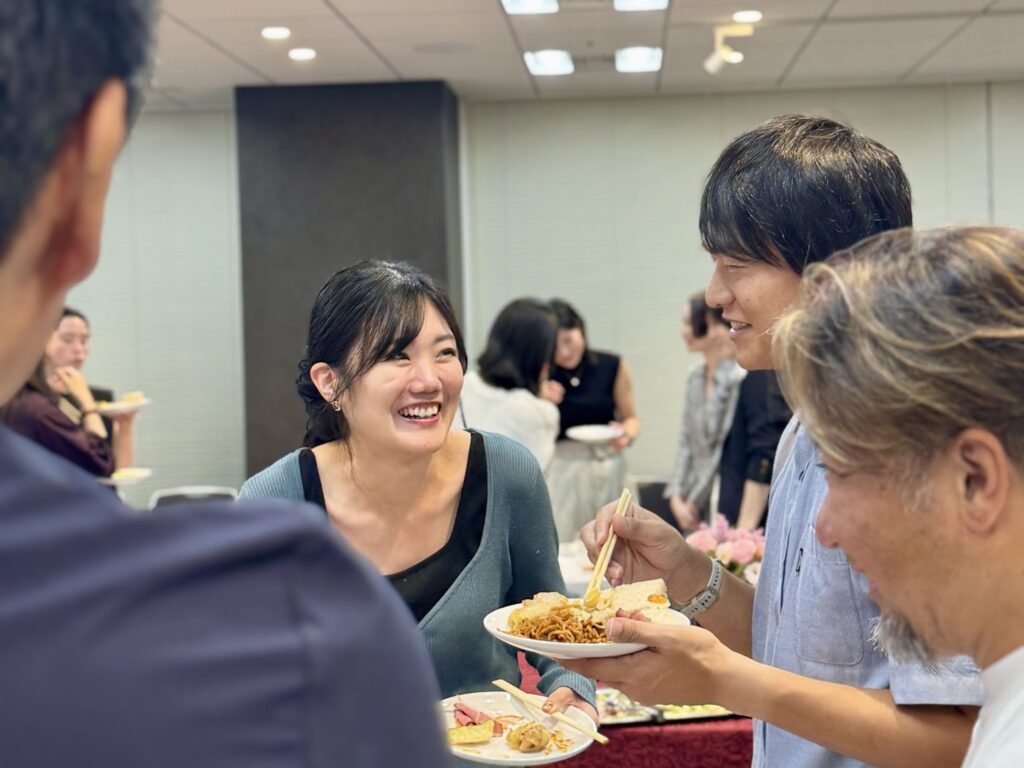
(At the October 2025 Meetup)
What are your goals at Yaraku?
I want to build Yaraku’s linguistic assets. I want to create data and guidelines so that no matter who writes, the text feels “distinctly Yaraku.” I also want to create more opportunities for people to realize the power of words.
What specific things have you done to build these linguistic assets?
For example, I developed a style guide for writing portal pages and a text guide for making announcements to all members on Slack. By establishing these, I feel a shift in the mindset of those sending information—from “just writing it” to “pausing to think about how to write so it truly gets across.” I believe staff members are now able to receive simpler, more sufficient information, making it easier for them to tackle those sometimes tedious back-office applications.
What inspired you to pursue translation even before joining Yaraku?
I really enjoyed going to after-school English classes when I was in 4th grade. That experience led me to choose a university that offered study abroad programs, and I went to England during my second year. When I came back in my third year, the Translation Studies class I took with Yamada-sensei (Professor at Rikkyo University & Evangelist at Yaraku) was so incredibly interesting. From there, I joined a translation seminar and thought, “Translation is my career!”
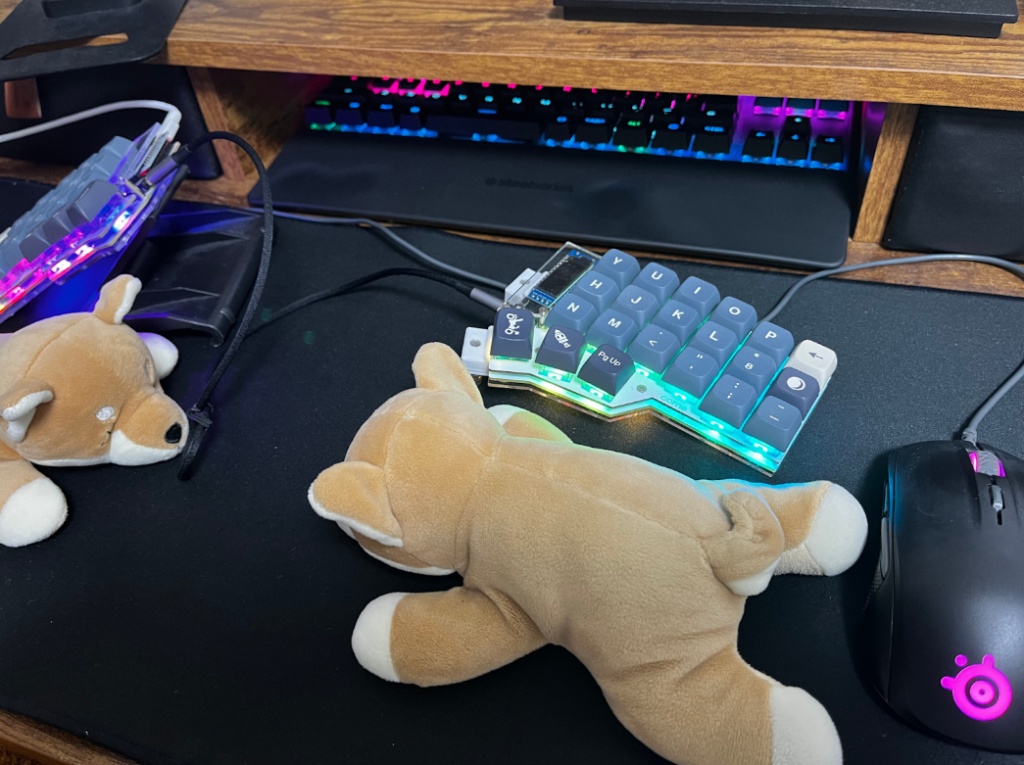
Her custom keyboard
—
A website created with a friend to share the fascination of translation: Practical Translation Club…https://ptc-honyaku.com/
—
What differences do you feel between being a freelancer and a regular employee?
In terms of mindset, I feel like I’m allowed to work at Yaraku with a “freelance spirit.” My core identity is centered on being a linguist and working with words. Since both my manager and team members understand that deeply, I am allowed to focus on what I love and what I’m good at. Thanks to that, I’ve been able to enjoy and proactively tackle any task lately.
My motto is ‘I only want to do things that are fun.’ Early in my career, this might have sounded like a spoiled kid just saying ‘no’ to things. But through working with the people at Yaraku, including our CEO Sakanishi-san, my managers in both teams I’ve belonged to, and everyone I’ve interviewed, I’ve learned the joy of stepping out of my comfort zone. I consider my current mindset a gift I’ve gained from all of them!
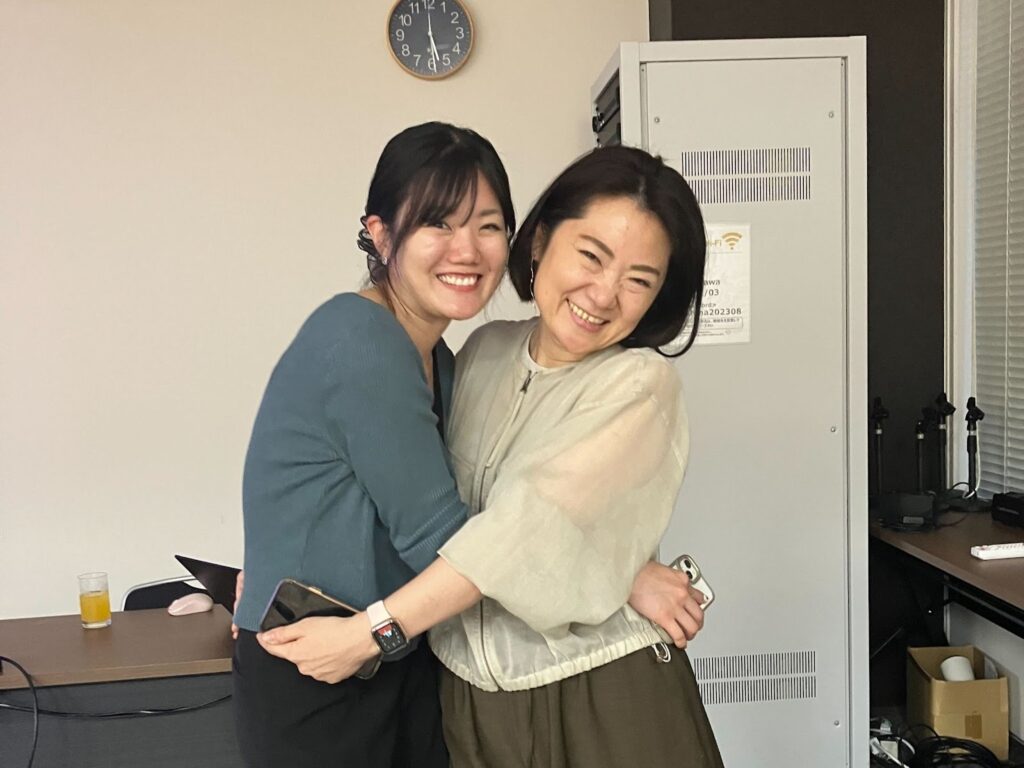
With HR & GA Team Manager, Makiko Nakayama
What kind of people do you want to work with at Yaraku?
Hmm… I guess people who don’t view a challenge as a “hardship,” or those who can communicate openly. Also, a keyword for me personally is “authentic” (being one’s natural self). Sakanishi-san says clearly when he doesn’t like something, and others who are more expressive aren’t afraid to let it show on their faces, but still everyone maintains a deep sense of respect for one another. I find this kind of atmosphere very comfortable, and it is thanks to this environment that I can truly be myself.
(Interviewer: Especially since we interact through a screen all the time, we hope to have more people who are open, natural, and engaging. We’re looking for someone who isn’t self-centered, but rather someone who can involve others to create a great vibe.)
— Exactly!